All Categories
Featured


A Guide to Debt for Young Specialists
Table of Contents
Modernizing Credit Healing in Texas
Financial healing in 2026 needs more than easy persistence and automated payments. The financial environment has actually moved toward data-heavy evaluation, where loan providers look beyond a single score to evaluate how individuals manage their month-to-month commitments. For homeowners who have actually dealt with unexpected earnings loss or unanticipated expenditures, the path to a higher credit ranking involves a mix of technical corrections and behavioral changes.Credit scoring designs in 2026 prioritize trended data. This indicates the last 24 months of payment history bring more weight than older mistakes. Somebody living in Texas might find that while a significant problem from 2 years ago still appears on their report, current constant behavior can considerably offset its effect. Financial therapists now emphasize the "velocity of repair," which focuses on how rapidly a customer go back to a status of on-time payments after a period of delinquency.Accuracy is the very first pillar of any recovery plan. It prevails for credit reports to contain clerical mistakes or outdated collection statuses. Confirmation stays the most direct method to see an immediate bump in a rating. Numerous individuals discover that results through Interest Rate Analysis supply the required clarity to move forward with a disagreement or a formal correction request. Clearing up a single misreported late payment can in some cases move a score from the subprime category into a more beneficial tier.
Strategic Usage of Debt
Professional guidance has ended up being a basic part of the rebuilding process in 2026. Instead of navigating complex laws alone, many customers turn to specialized services to handle the interaction with bureaus and lenders. Using Debt allows for a more structured technique to financial obligation validation. This is especially helpful when handling "zombie financial obligation" or old accounts that have been sold several times in between collection agencies.Expert counselors often suggest the "reporting expansion" method. In 2026, many scoring models now accept "alternative information," that includes utility expenses, streaming memberships, and rent payments. Previously, these expenses did not help a credit report. Now, they are often the fastest way to develop a "thin file" into a more substantial history. For those in Texas, choosing into these reporting programs can show a pattern of dependability that conventional charge card might miss.Security is also a major concern. When rebuilding, customers are frequently targets for high-interest predatory loans. Professional therapists warn against "credit repair" plans that assure to wipe a report tidy overnight. Real progress is determined in months, not days. The advantages of Financial Emotional Wellness Programs are discovered in long-lasting method and the education offered to the consumer, rather than quick-fix gimmicks that may breach federal regulations.
Managing High-Interest Responsibilities and Collections
The high interest rate environment of 2026 makes bring revolving debt pricey. If a customer is stuck to a credit card balance at a 28% rates of interest, the interest alone can avoid the principal from ever reducing. Financial obligation restructuring is often a much better course than simple minimum payments. Negotiating a "pay-for-delete" arrangement with a debt collector is one tactic that has seen a revival in 2026. In this situation, the consumer accepts pay a portion of the financial obligation in exchange for the company removing the negative entry entirely.However, these contracts should be in composing. Verifying that a debt collector has the legal right to collect is the very first step. If a financial obligation is beyond the statute of limitations for Texas, paying it could really restart the clock on the length of time it remains on the report. Understanding these specific legal timelines is a hallmark of professional counseling methods used today.
New Credit Building Tools for 2026
Conventional charge card are no longer the only way to develop a favorable history. Safe cards remain popular, but "credit contractor loans" have become more advanced. These items work by holding the loan amount in a locked cost savings account while the customer makes regular monthly payments. When the loan is settled, the funds are launched to the consumer, and the history of on-time payments is reported to all 3 major bureaus.Another trend in 2026 is using fintech platforms that use "margin-based" credit. These accounts look at an individual's bank balance and earnings rather than just their past credit report. By showing a consistent capital, people can access little credit lines that help build a score without the danger of deep debt. Those investigating Calculators for Debt Reduction typically find that these tech-forward services offer a bridge when conventional banks provide limited choices.
The Impact of Medical Financial Obligation and Public Records

A considerable modification in 2026 is how medical financial obligation is treated. A lot of medical collections under a specific threshold no longer appear on credit reports, and paid medical financial obligation is gotten rid of right away. This has supplied relief for millions of individuals whose ratings were previously suppressed by healthcare costs. Tax liens and civil judgments can still produce obstacles.Counselors in Texas recommend a "clean slate" audit every 6 months. This includes checking for any public records that might have been settled however not yet updated in the bureau's database. Since much of the credit reporting process is now automated through AI, small information mismatches can result in substantial rating drops. Keeping a paper path of every settlement and payment is more crucial now than it was five years ago.
Developing Sustainable Financial Habits
Rebuilding is not practically the numbers; it has to do with changing the underlying habits that resulted in the obstacle. Budgeting apps that sync directly with checking account have become more predictive. In 2026, a number of these tools can warn a user if their current costs will lead to a missed out on payment 3 weeks before the due date. This proactive method helps avoid brand-new damage while old damage is being repaired.Setting up a "buffer fund" is the very best defense against future credit hits. A lot of specialists recommend a minimum of one month of costs in a liquid account. When a vehicle repair work or medical expense develops, the consumer can pay in cash rather than depending on high-interest credit, which secures the usage ratio. Credit utilization-- the amount of credit utilized versus the total limit-- remains a heavy element in scoring. Keeping this under 10% is the goal for anybody serious about reaching the top-tier rating brackets.
Final Actions in the Reconstructing Process
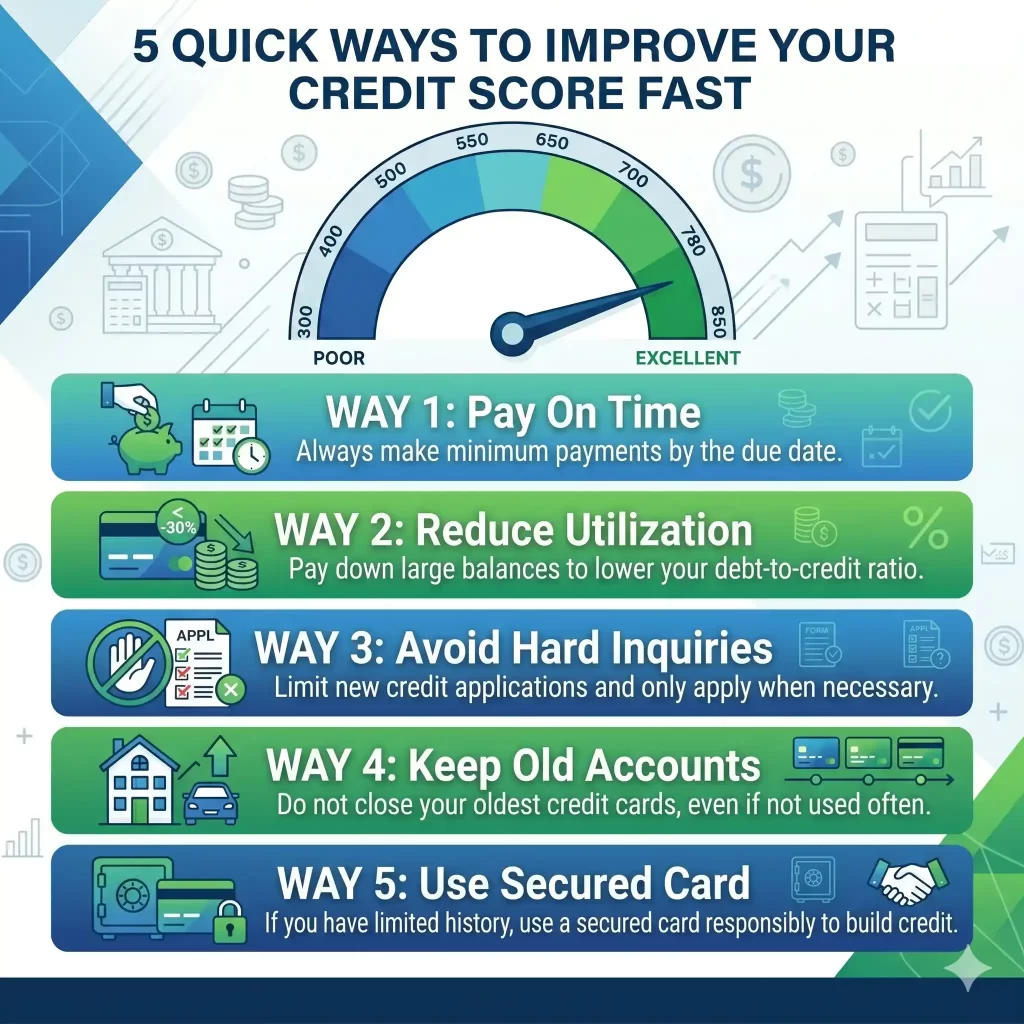
When a score starts to climb up, the temptation to get several new accounts is high. Nevertheless, "difficult questions" can momentarily reduce a score. In 2026, lending institutions are more conscious "credit seeking habits." It is much better to wait on pre-approved offers with favorable terms than to shotgun applications across numerous lenders.Consistency over a 12-month period is typically sufficient to move a score from "poor" to "fair" or "excellent." For a homeowner of Texas, this development opens doors to lower insurance premiums, much better rental alternatives, and improved mortgage rates. The financial landscape of 2026 is competitive, and a healthy credit profile is the most valuable tool a customer can own. By combining expert Debt with modern-day fintech tools and disciplined costs, anybody can overcome a financial obstacle and restore their standing in the market.The process is frequently sluggish, however the cumulative impact of little, correct actions is effective. Each on-time payment and each contested error brings the customer more detailed to a state of monetary freedom where they are no longer defined by their past errors. Staying notified about changes in credit laws and scoring models will make sure that the progress made in 2026 lasts for years to come.

Latest Posts

Your Legal Rights Under 2026 Credit Laws

Understanding Legal Rights in 2026 Regulations

Learning Key Financial Literacy Principles for Today's Adults